

The Christmas Masterclass: A Detailed Analysis of the 2025 Festive Menu from Gasthof Krone
Christmas is not merely a holiday; in the culinary world, it is the crescendo of the year. The 2025 Christmas Menu by Chef Erik Metzger at Gasthof Krone is a study in festive opulence tempered by technical restraint. It balances the heavy, comforting flavors of winter—truffle, oxtail, venison—with flashes of acidity and modern texture.
This analysis is not a recipe book. It is a culinary reconstruction, an attempt to decipher the techniques, science, and dedication required to create dishes at this level. This is the complete collection, a tribute to the craftsmanship of the holiday season.
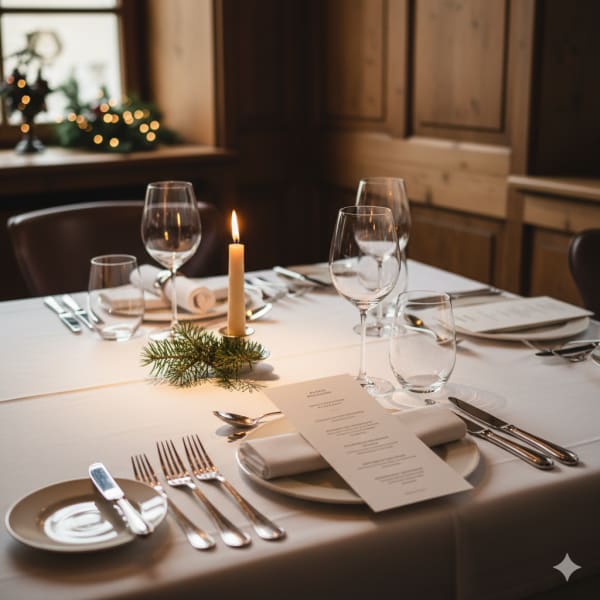
From winter harvest to festive plate – a journey into the depths of haute cuisine, inspired by Chef Erik Metzger.
Philosophical Framework
Section titled “Philosophical Framework”Final Note – The Architecture of Celebration
Section titled “Final Note – The Architecture of Celebration”Chef Erik Metzger understands that a Christmas menu must perform two contradictory functions: it must offer the comfort of tradition and the excitement of the new. This menu is constructed on Duality: — The Beetroot Salmon juxtaposes earthy roots with oceanic fat. — The Tartare plays with temperature, setting warm brioche against ice-cold mustard ice cream. — The Veal Wellington takes a rustic classic and refines it into a geometric masterpiece.
To cook this menu is to respect time. The curing of the salmon, the braising of the oxtail, the maturing of the truffle cheese—these are ingredients that cannot be rushed. This reconstruction invites you to slow down and observe the details.
Starters (Vorspeise)
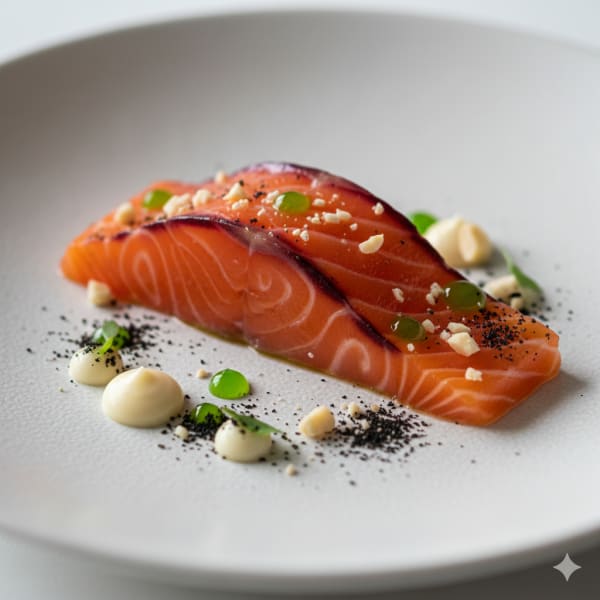
Section titled “Starters (Vorspeise)”Beetroot Cured Salmon | Parsnip | Macadamia | Wasabi | Nori
Section titled “Beetroot Cured Salmon | Parsnip | Macadamia | Wasabi | Nori”A visual and textural masterpiece. The earthiness of the beetroot cures the fish, firming its texture, while the macadamia and wasabi offer a fatty, spicy counterpoint.
Michelin-Star Quality Ingredient List
Section titled “Michelin-Star Quality Ingredient List”- Salmon: Label Rouge Scottish Salmon (center cut, sashimi grade)
- Cure: Fresh beetroot juice, coarse sea salt, sugar, dill, orange zest
- Parsnip: Frost-sweetened parsnips, cream, butter
- Crunch: Roasted Macadamia nuts, high-quality Nori sheets
- Heat: Fresh Wasabi rhizome
Detailed Cooking Instructions
Section titled “Detailed Cooking Instructions”-
The Curing (Transformation of Texture)
- WHEN: 48 hours in advance.
- HOW: The salmon fillet is covered in a mixture of grated raw beetroot, salt, and sugar. It is weighted down and refrigerated.
- WHY: The salt draws out moisture, concentrating the flavor and firming the flesh. The geosmin in the beetroot infuses the fish with an earthy aroma and stains the outer millimeter a deep, vibrant purple, creating a stunning visual contrast when sliced.
-
The Accompaniments (Creaminess and crunch)
- HOW:
- Parsnip: Cooked in milk and blended into a silk-like purée to echo the sweetness of the cure.
- Macadamia: Roasted to release oils, then micro-planed over the dish for a snow-like, buttery finish.
- Wasabi/Nori: Dots of wasabi gel provide heat; nori powder adds the umami depth of the ocean.
- HOW:
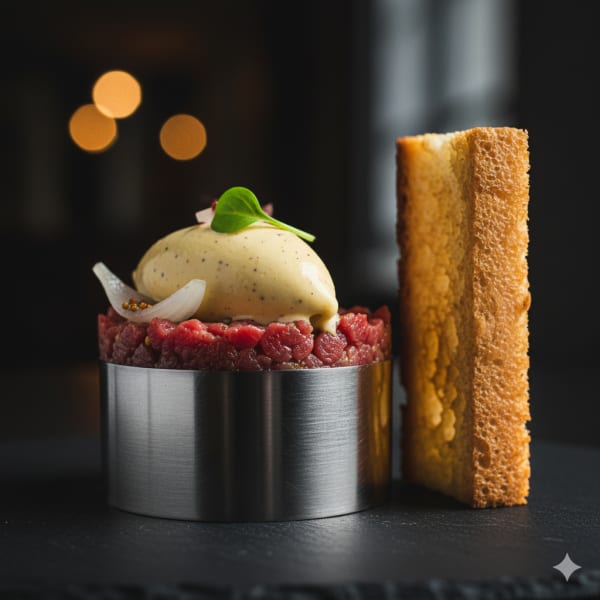
Beef Tartare | Coleslaw | Brioche | Mustard Ice Cream | Pearl Onion
Section titled “Beef Tartare | Coleslaw | Brioche | Mustard Ice Cream | Pearl Onion”A daring interplay of temperatures. The classic beef tartare is modernized with the sharp acidity of pickles and the unexpected sensation of savory ice cream.
Michelin-Star Quality Ingredient List
Section titled “Michelin-Star Quality Ingredient List”- Beef: Dry-aged beef fillet (tenderloin), strictly hand-cut
- Senfeis (Mustard Ice Cream): Whole grain mustard, Dijon mustard, cream, egg yolks, glucose
- Coleslaw: White cabbage hearts, fine vinegar, caraway oil
- Brioche: Homemade, high butter content
Detailed Cooking Instructions
Section titled “Detailed Cooking Instructions”-
The Mustard Ice Cream (The Surprise)
- HOW: A savory anglaise base is made with egg yolks and cream, infused with two types of mustard. It is churned in a Pacojet for an ultra-smooth texture without ice crystals.
- WHY: The cold temperature numbs the palate slightly, making the heat of the mustard bloom slowly rather than instantly. It acts as the “sauce” for the meat as it melts.
-
The Tartare & Brioche (The Foundation)
- HOW: The meat is diced into a perfect brunoise, not ground. It is seasoned minimally to let the beef shine. The brioche is toasted in clarified butter.
- WHY: Hand-cutting ensures the meat retains its chew and doesn’t become a paste. The warm, buttery brioche offers a comforting, sweet contrast to the acidic coleslaw and cold ice cream.
Intermediate Course (Zwischengang)
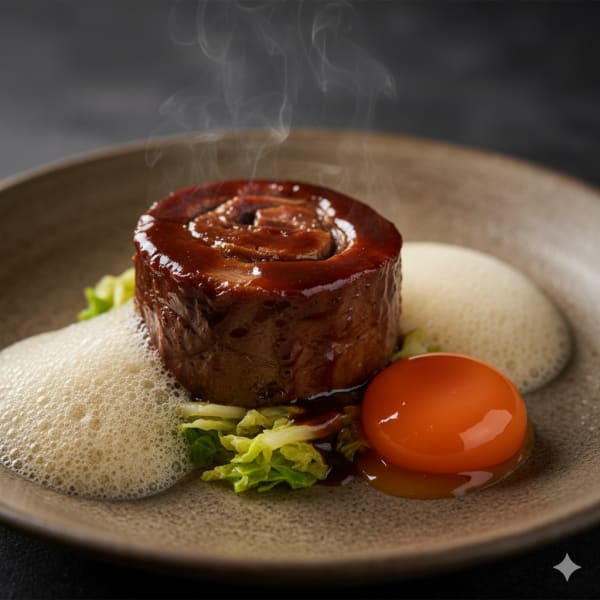
Section titled “Intermediate Course (Zwischengang)”Oxtail Rolls | Truffled Cream Savoy | Egg Yolk | Potato | Madeira Foam
Section titled “Oxtail Rolls | Truffled Cream Savoy | Egg Yolk | Potato | Madeira Foam”High-end comfort food. This dish elevates humble ingredients—oxtail and cabbage—through laborious technique and luxury additions like truffle and Madeira.
Michelin-Star Quality Ingredient List
Section titled “Michelin-Star Quality Ingredient List”- Oxtail: Fresh oxtail, red wine, mirepoix
- Savoy Cabbage: Young savoy cabbage leaves, cream, Périgord truffle
- Madeira Foam: Aged Madeira wine, veal stock, lecithin or butter
- Egg Yolk: Organic egg
Detailed Cooking Instructions
Section titled “Detailed Cooking Instructions”-
The Oxtail (Collagen to Gelatin)
- WHEN: 2 days in advance.
- HOW: The oxtail is braised for 6+ hours until falling off the bone. The meat is picked, mixed with a reduction of the braising liquid, seasoned, and rolled into a perfect cylinder using cling film, then chilled to set.
- WHY: Oxtail is rich in connective tissue. Long, slow cooking converts this into gelatin, giving the roll a rich, sticky mouthfeel that requires no binder.
-
The Components (Earth and Air)
- HOW:
- Savoy Cabbage: Cut into fine chiffonnade and blanched, then bound with a truffle-infused cream reduction.
- Madeira Foam: The braising juices are fortified with Madeira and frothed with an immersion blender.
- Egg Yolk: Confit or sous-vide at 64°C to create a rich natural sauce.
- WHY: The cabbage provides texture and earthy notes; the Madeira foam adds acidity and sweetness to cut through the heavy richness of the oxtail.
- HOW:
Fish Course (Fischgang)
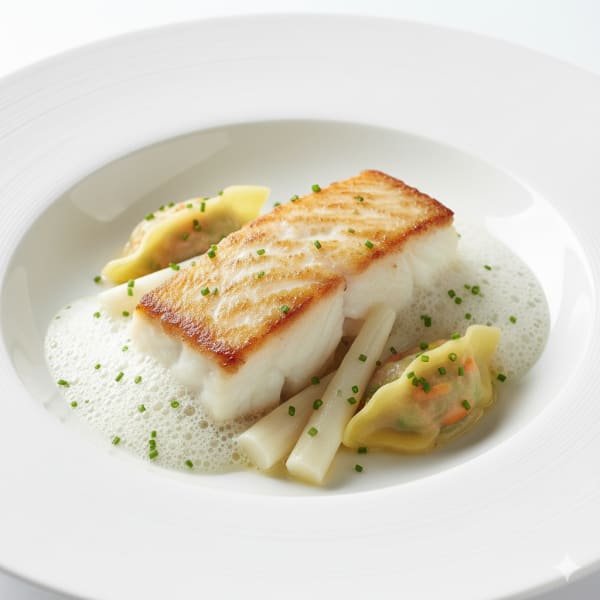
Section titled “Fish Course (Fischgang)”Halibut | Salsify | Vegetable Ravioli | Parmesan | Lemongrass Beurre Blanc
Section titled “Halibut | Salsify | Vegetable Ravioli | Parmesan | Lemongrass Beurre Blanc”A winter fish course that brings brightness to the dark season. The lemongrass introduces a fragrant, citrusy note that lifts the earthy salsify.
Michelin-Star Quality Ingredient List
Section titled “Michelin-Star Quality Ingredient List”- Halibut: Wild-caught White Halibut (Greenland or Iceland)
- Salsify (Schwarzwurzel): “Vegetable oysters,” lemon juice, milk
- Ravioli: Pasta dough (30 yolks/kg flour), vegetable brunoise filling
- Sauce: Fish stock, white wine, fresh lemongrass stalks, cold butter
Detailed Cooking Instructions
Section titled “Detailed Cooking Instructions”- HOW:
- Halibut: Pan-seared gently to achieve a golden crust while keeping the center pearlescent.
- Salsify: Peeled under water (to prevent oxidation), sous-vide cooked with butter and milk to remain white and tender, then glazed.
- Lemongrass Beurre Blanc: A classic butter sauce infused with bruised lemongrass stalks. It is strained and foamed just before serving.
- WHY: Salsify has a delicate, nutty flavor often called “winter asparagus.” The lemongrass cuts the richness of the butter sauce and the parmesan, bridging the gap between the pasta and the fish.
Main Courses (Hauptgang)
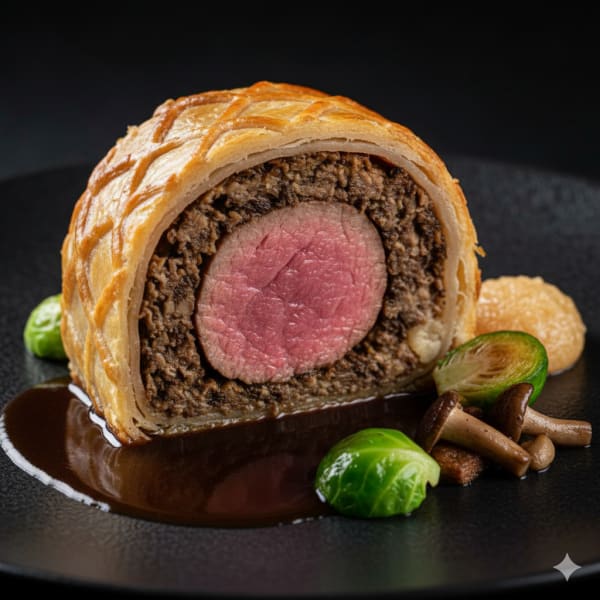
Section titled “Main Courses (Hauptgang)”Veal Wellington | Stroganoff | Brussels Sprouts | Mushrooms | Brown Butter
Section titled “Veal Wellington | Stroganoff | Brussels Sprouts | Mushrooms | Brown Butter”A lighter, more refined take on the Beef Wellington. This dish is a technical showstopper involving pastry work and precise timing.
Michelin-Star Quality Ingredient List
Section titled “Michelin-Star Quality Ingredient List”- Veal: Veal tenderloin (mild and tender), trimmed of all silver skin
- Pastry: All-butter puff pastry, crêpes (to wrap the meat and prevent soggy pastry)
- Stroganoff: A deconstructed interpretation—likely a sauce with beetroot reduction, pickle essence, and sour cream or a ragout.
- Vegetables: Brussels sprout leaves (blanched), sautéed wild mushrooms
Detailed Cooking Instructions
Section titled “Detailed Cooking Instructions”- The Wellington Construction:
- The veal is seared briefly and cooled.
- It is coated in a mushroom duxelles (finely chopped mushrooms cooked down to a paste).
- Wrapped first in savory crêpes (to absorb moisture), then in puff pastry.
- Baked at 200°C until the pastry is golden and the core temperature reaches 54°C.
- The Brown Butter (Nussbutter):
- Butter is cooked until the milk solids caramelize, adding a hazelnut aroma that ties the sprouts and pastry together.
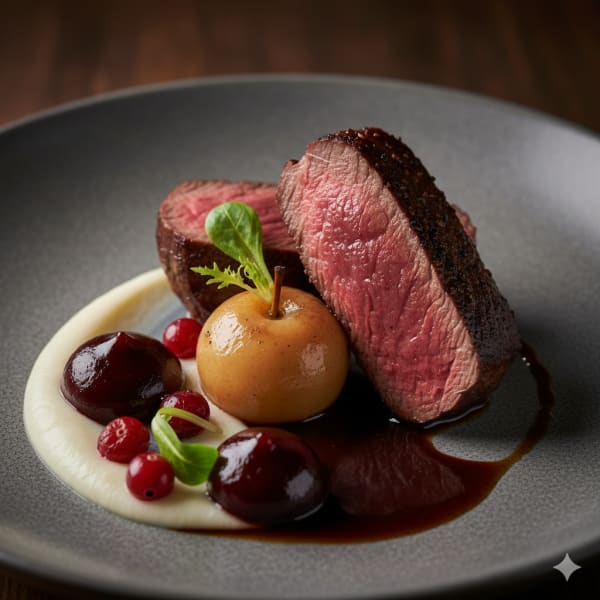
Saddle of Venison | Celery | Red Cabbage | Apple | Lamb’s Lettuce | Cranberry
Section titled “Saddle of Venison | Celery | Red Cabbage | Apple | Lamb’s Lettuce | Cranberry”The quintessence of a German Christmas. Game meat paired with fruit and winter vegetables is a combination that relies on the quality of the sourcing.
Michelin-Star Quality Ingredient List
Section titled “Michelin-Star Quality Ingredient List”- Venison: Saddle of venison (Rehrücken), bone-in for roasting, fillet removed for serving
- Celery: Celeriac, cooked in salt crust or milk
- Red Cabbage: Braised with apple, cinnamon, and cloves, then puréed or served as a terrine
- Fruit: Granny Smith apple (for acidity), wild cranberries
Detailed Cooking Instructions
Section titled “Detailed Cooking Instructions”- HOW:
- Venison: The saddle is roasted on the bone to protect the delicate meat, then the fillets are carved off and rested. The goal is a uniform pink color (rosé) throughout.
- Celery: Prepared as a smooth, white purée to provide a creamy, neutral canvas for the strong game flavor.
- Lamb’s Lettuce (Feldsalat): Served as a minimal garnish, perhaps with a walnut oil dressing, offering a nutty, fresh crunch.
- WHY: Venison is extremely lean. Overcooking by even a minute results in liver-like texture. The apple and cranberry provide the necessary acidity to cut through the gamey notes and the richness of the sauce.
Cheese (Käse)
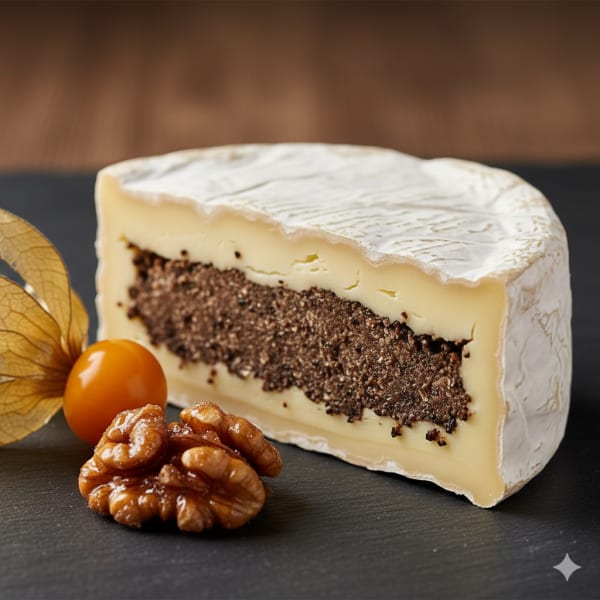
Section titled “Cheese (Käse)”Truffled Brie de Meaux | Physalis | Walnut
Section titled “Truffled Brie de Meaux | Physalis | Walnut”Not just a slice of cheese, but a constructed cheese course. The truffle is not a garnish; it is an integral layer.
Michelin-Star Quality Ingredient List
Section titled “Michelin-Star Quality Ingredient List”- Cheese: Brie de Meaux AOP (perfectly ripe, running but not collapsing)
- Filling: Mascarpone, chopped black truffles, truffle oil
- Accompaniments: Caramelized walnuts, physalis chutney
Detailed Cooking Instructions
Section titled “Detailed Cooking Instructions”- HOW: The wheel of Brie is cut in half horizontally while cold. A mixture of mascarpone and generous amounts of chopped truffle is spread in the center. The wheel is reassembled and allowed to “ripen” for 48 hours so the truffle aroma permeates the fat of the cheese.
- WHY: Fat carries flavor. By embedding the truffle inside the cheese, the aroma becomes three-dimensional. The physalis provides a sweet-tart acidity to cleanse the palate after the rich cheese.
Dessert
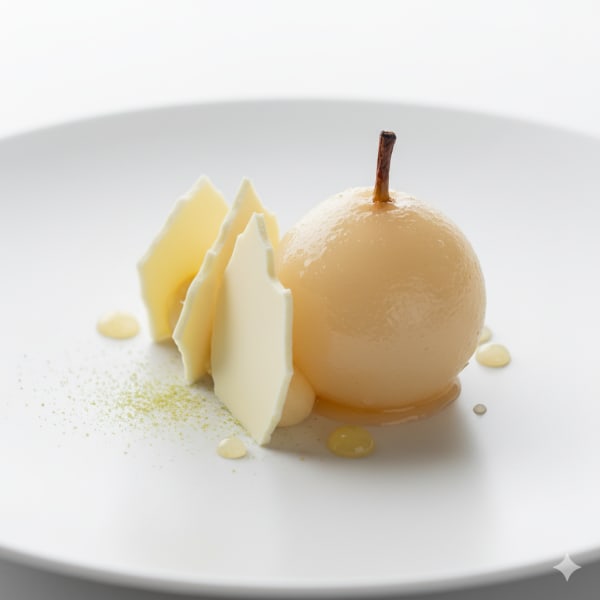
Section titled “Dessert”Pear | Cardamom | Lemon | Opalys
Section titled “Pear | Cardamom | Lemon | Opalys”A dessert of pure white elegance. Valrhona Opalys chocolate offers a distinct milky sweetness that pairs beautifully with the floral notes of pear and the warmth of cardamom.
Michelin-Star Quality Ingredient List
Section titled “Michelin-Star Quality Ingredient List”- Pear: Williams Christ or Conference pears
- Chocolate: Valrhona Opalys (33% white chocolate, known for its pure color and low sugar sensation)
- Spice: Green cardamom pods
- Acid: Amalfi lemon (zest and juice)
Detailed Cooking Instructions
Section titled “Detailed Cooking Instructions”-
The Pear (Texture and Infusion)
- HOW: The pears are poached in a syrup infused with lemon zest and crushed cardamom pods until tender but yielding. They may be served as a hollowed sphere or precision-cut terrine.
- WHY: Cardamom shares chemical compounds with pear, making them a natural flavor pairing. The poaching liquid ensures the pear doesn’t brown and remains pristine white.
-
The Opalys (Creamy texture)
- HOW: Prepared as a whipped ganache (namelaka) or a delicate mousse. The white chocolate provides the fatty, creamy mouthfeel that carries the fruit flavors.
- WHY: White chocolate can be cloying. The inclusion of lemon gel or zest is essential to cut the sweetness and maintain the dessert’s refreshing character after a heavy Christmas meal.
Conclusion
Section titled “Conclusion”The 2025 Christmas Menu at Gasthof Krone is a lesson in balance. Chef Metzger navigates the fine line between the expected festive richness and the necessary culinary precision of a Michelin-standard kitchen.
To eat this menu is to experience Christmas not just as a memory, but as a living, breathing culinary art form.